
Choosing between drywall and plaster often becomes an important decision during home renovations in Edmonton. Many older homes still contain original plaster walls, while modern renovation work typically uses drywall systems. Each material behaves differently when it comes to repairs, installation speed, and long term maintenance. All Star Walls Contractor regularly evaluates both wall types during renovation projects and helps homeowners determine whether repairing plaster or converting to drywall makes more practical sense.
Why Older Edmonton Homes Often Still Have Plaster
Many homes built in Edmonton before the mid twentieth century used plaster wall construction. Builders relied on this system because it created strong and durable interior walls. During renovation projects today, contractors frequently uncover these original plaster walls beneath paint, wallpaper, or newer surface materials.
Lath and plaster construction
Traditional plaster walls consist of multiple layers applied over narrow wooden strips called lath. Builders attached these thin pieces of wood to wall studs and then applied wet plaster over the surface. The plaster pushed through small gaps in the lath and hardened, forming a strong bond behind the wood.
This technique created dense wall surfaces that offered good durability and sound dampening. However, the strength of the wall depends heavily on the connection between the plaster layers and the lath beneath them.
Common aging issues
Over time, plaster walls can develop structural problems as houses settle or materials age. Renovation work often reveals these issues after surface coverings are removed.
Common aging issues include:
• Hairline cracks along wall surfaces
• Sections where plaster separates from the lath
• Bulging or uneven wall areas
• Damage from previous repair attempts
These problems influence whether repairing plaster remains practical or whether replacing the wall system becomes the better renovation approach.
Performance Comparison for Modern Renovations
| Feature | Drywall | Plaster |
|---|---|---|
| Cost | Typically lower material and labor cost | Usually higher labor cost for repairs |
| Installation Speed | Faster installation and finishing | Slower repair and curing process |
| Crack Resistance | More flexible with minor structural movement | More prone to cracking with house settling |
| Repair Ease | Panels can be patched or replaced easily | Repairs often require rebuilding plaster layers |
| Compatibility with Insulation | Easier access to framing and insulation upgrades | Existing plaster limits access to wall cavities |
When Repairing Plaster Makes Sense
In certain renovation situations, repairing plaster remains the most practical option. Small cracks or isolated damaged areas can often be stabilized and patched without removing the entire wall structure.
Repairing plaster may make sense when the majority of the wall remains structurally sound and the homeowner wants to preserve the original character of the house. Some older Edmonton homes contain architectural features designed to work with plaster walls, which can make preservation preferable during light renovation work.
When plaster remains stable and only localized damage exists, targeted repairs can restore the wall surface without major structural changes.
When Converting to Drywall Is the Better Investment
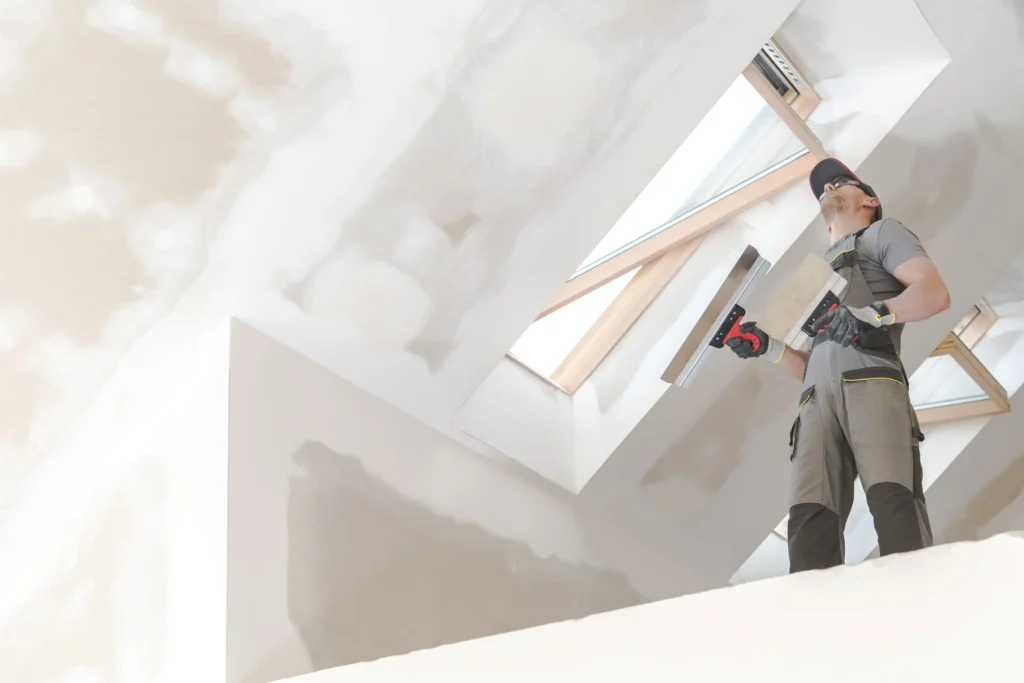
Some renovation scenarios make drywall installation more practical than repairing aging plaster walls. Drywall integrates easily with modern construction methods and can simplify larger renovation projects.
Full gut renovations
When renovation plans involve removing walls down to the framing, installing drywall often becomes the most efficient option. Contractors can install drywall panels quickly and create consistent surfaces across the entire room. This approach also allows renovation crews to inspect framing and update structural components before finishing the walls.
Re-framing or insulation upgrades
Many renovation projects include electrical upgrades, insulation improvements, or structural modifications. Accessing the wall cavity becomes significantly easier once plaster walls are removed.
Switching to drywall allows contractors to update insulation, run wiring, and improve wall performance without working around the limitations of the original plaster system.
How All Star Walls Contractor Evaluates Walls During Renovation Projects
Every renovation project presents different wall conditions. Contractors must evaluate the structural integrity of plaster walls, the age of the home, and the scope of the renovation before recommending repairs or replacement.
Experienced drywall professionals inspect wall framing, check for plaster separation, and determine whether repairs will provide a lasting solution. Renovation teams such as All Star Walls Contractor review these structural factors before deciding whether plaster restoration or drywall installation will deliver the best result.
This evaluation allows homeowners to balance preserving existing materials with the practicality and efficiency of modern drywall systems.