
Paint failure over new drywall usually happens because the surface was not fully prepared, primed, cured, or dried before painting began. In Edmonton homes, temperature swings, indoor humidity, drywall finishing quality, and rushed renovation timelines can all affect how paint bonds to fresh drywall surfaces. Even smooth-looking drywall can still develop peeling, bubbling, flashing, visible joint lines, or uneven sheen after paint dries. All Star Walls helps Edmonton homeowners identify whether paint failure comes from drywall finishing problems, moisture exposure, primer issues, or premature painting conditions.
The Most Common Signs of Paint Failure on Fresh Drywall
Paint failure on new drywall usually becomes visible through texture inconsistency, adhesion problems, or visible finishing defects that appear after paint dries or cures. Some problems show immediately, while others become more noticeable under natural light, overhead lighting, or seasonal humidity changes.
Common paint failure signs include:
- Peeling paint around seams, corners, or repaired areas
- Bubbling or blistering caused by trapped moisture or adhesion failure
- Flashing where sections reflect light differently across the wall
- Joint banding where taped seams remain visible through paint
- Uneven sheen caused by inconsistent surface absorption or primer coverage
Some failures only affect appearance, while others indicate poor bonding between drywall surfaces, primer, and paint layers. Identifying which condition is present usually determines whether the wall requires repainting, spot correction, re-priming, or additional drywall refinishing.
Surface Preparation Mistakes That Lead to Failure
Most paint failures over new drywall begin during surface preparation rather than during final paint application. Drywall finishing residue, uneven sanding, poor dust removal, and inconsistent primer absorption can all interfere with how paint cures and bonds to the wall surface.
Fresh drywall also contains multiple surface textures at the same time. Joint compound, exposed drywall paper, patched repairs, and corner finishing areas absorb primer and paint differently unless the surface receives proper preparation beforehand.
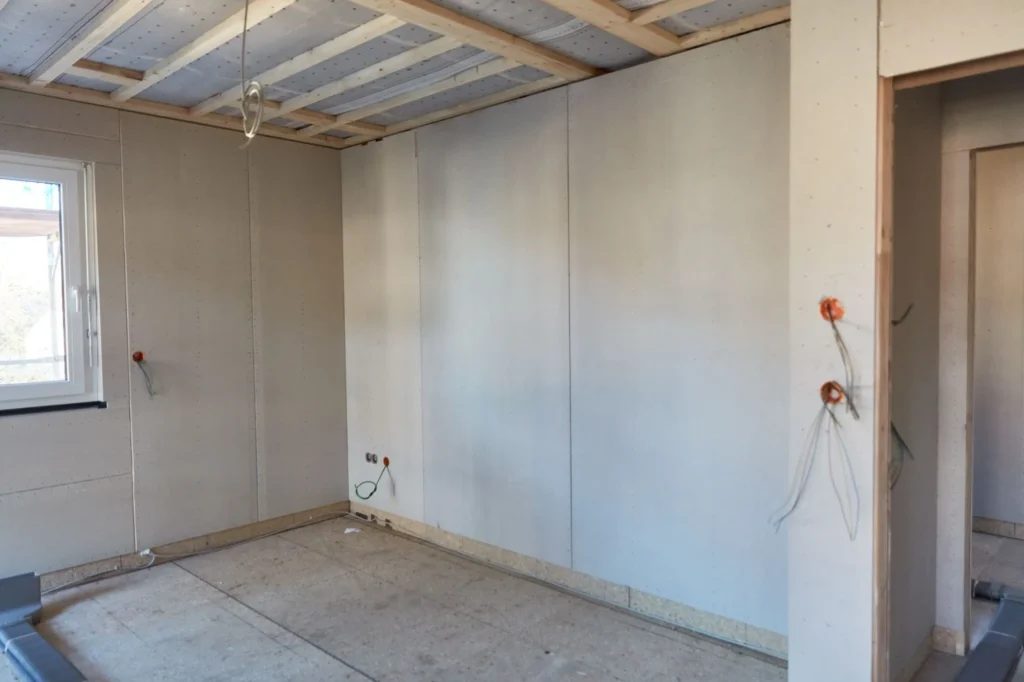
Inadequate Sanding and Dust Removal
Drywall sanding dust creates one of the most common causes of paint adhesion failure on new drywall surfaces. Fine dust particles can remain on walls, ceilings, corners, trim edges, and repaired sections even when the surface appears visually clean.
Applying paint or primer over sanding residue can significantly weaken bonding strength. Uneven sanding may also leave ridges, rough patches, visible tool marks, or inconsistent textures that become more noticeable after paint dries.
Lighting conditions often expose sanding issues more aggressively after painting. Side lighting, large windows, and overhead fixtures can highlight drywall imperfections that appeared less noticeable before primer and paint application.
Skipping or Misusing Primer
Primer plays a critical role on new drywall because fresh joint compound and exposed drywall paper absorb paint unevenly without a sealed surface underneath. When contractors skip primer entirely, paint may soak into some areas while remaining on the surface in others, creating uneven sheen and flashing issues.
Incorrect primer selection can also create bonding problems. Certain primers do not properly seal porous drywall compound, while others dry too quickly under specific temperature or humidity conditions. Applying finish paint directly over unprimed repairs or patched areas commonly causes visible texture and sheen differences across the wall.
In some situations, homeowners mistake paint coverage problems for drywall finishing defects when inconsistent surface absorption from improper priming is the actual cause.
Moisture and Humidity Issues During Drying
Moisture and humidity can interfere with both drywall curing and paint adhesion during renovation projects. Even when drywall feels dry to the touch, trapped moisture inside compound layers or unstable air conditions may still interfere with primer and paint curing.
Seasonal temperature swings, cold weather, limited ventilation, and indoor humidity buildup commonly affect drying conditions in Edmonton homes. Basements, recently insulated spaces, and poorly ventilated renovation areas often require longer curing periods than homeowners expect.
Excess moisture may contribute to bubbling, soft paint film, peeling edges, delayed curing, or weak adhesion between drywall compound and primer layers. Cold surfaces can also affect how paint levels and bonds during application. If drying conditions remain unstable during curing, visible defects may continue developing after the paint initially appears finished.
Primer Selection Errors on New Drywall
Different drywall conditions require different primer performance characteristics. New drywall surfaces often contain a combination of bare drywall paper, porous compound, patched repairs, sanded edges, and high-absorption areas that react differently during painting.
Low-quality primer or incorrect product selection can leave porous areas partially sealed, causing inconsistent sheen and visible flashing after paint dries. Some products also struggle to bond properly over heavily sanded surfaces or fine drywall dust residue.
Paint failure may also occur when contractors apply water-based products over surfaces that still contain moisture from drywall compound curing. Under certain conditions, additional sealing primers or higher-build primers may become necessary to create a more uniform surface before finish paint application.
Primer itself does not correct poor drywall finishing. Visible ridges, uneven texture, tool marks, or joint imperfections underneath the surface may become even more noticeable once light reflects across the painted wall.
How to Fix Failed Paint Without Replacing Drywall
Most paint failures over new drywall do not require full drywall replacement. Corrective work usually depends on whether the problem comes from surface contamination, moisture exposure, primer failure, drywall finishing defects, or paint adhesion breakdown.
Minor flashing, uneven sheen, or isolated bonding problems may only require sanding, spot priming, and repainting. More severe peeling, bubbling, or visible seam problems may require removal of loose material, additional drywall refinishing, re-priming, and controlled repainting conditions.
If moisture exposure caused the failure, the moisture source usually needs correction before repainting begins. Repainting over unresolved moisture conditions often leads to repeated adhesion problems later.
Walls showing visible joint banding or uneven surface texture may also require additional skim coating or drywall refinishing before repainting. In these situations, the underlying issue often relates more to finishing quality than to the paint itself.
Preventing Paint Problems in Future Renovations
Preventing paint failure over new drywall depends on controlling surface preparation, environmental conditions, product compatibility, and curing time throughout the renovation process. Most long-term paint problems develop when renovation timelines compress drying stages or when painters apply paint before conditions stabilize.
Consistent sanding quality, complete dust removal, proper primer selection, stable indoor temperatures, and controlled humidity all improve paint performance on fresh drywall. Contractors should also inspect drywall surfaces under direct lighting before priming and painting begins because angled light exposure often reveals finishing defects.
Edmonton renovation projects often face additional seasonal drying challenges during colder months when ventilation decreases and indoor humidity levels fluctuate more aggressively. Allowing proper curing time before final paint application usually reduces the risk of flashing, peeling, bubbling, and uneven finish conditions later.