
Soundproofing vs thermal insulation is a common point of confusion during renovations because both involve wall and ceiling cavities, but they solve different problems. Soundproofing controls noise transfer between rooms or floors, while thermal insulation controls heat movement through the building envelope. In Edmonton homes, both may matter, but the right priority depends on whether the problem is comfort, privacy, energy loss, or room function. All Star Walls helps homeowners understand how insulation and wall assemblies affect both performance goals during renovation planning.
The Core Difference: Noise Control vs Heat Control
Soundproofing reduces how much noise moves through walls, ceilings, and floors. It applies to airborne sound such as voices and music, impact noise such as footsteps, and structure-borne vibration that travels through framing. Each behaves differently, with airborne noise partially absorbed in cavities while vibration often travels through connected materials.
Thermal insulation slows heat transfer. It keeps warm air inside during Edmonton winters and reduces unwanted heat movement through exterior walls, attics, garages, and other temperature-sensitive areas.
These systems can overlap in application, but they serve different purposes. A wall may have strong R-value yet still allow sound transfer through studs, gaps, penetrations, or weak assemblies. Effective acoustic performance, such as reduced speech audibility, does not guarantee reliable heat retention in exterior conditions.
How Wall Assemblies Handle Sound and Temperature
A wall assembly includes more than the insulation inside the cavity. Studs, drywall, air sealing, cavity depth, insulation density, fasteners, gaps, and connected framing all affect performance.
Different framing types change both sound and thermal behavior. Single stud walls transfer more vibration than separated or staggered assemblies. Wood framing also creates thermal bridging paths, which reduces effective insulation performance.
For sound control, the assembly must limit vibration and block sound paths. For heat control, it must resist heat movement and stop air leakage. In most renovations, air sealing, framing connection, and cavity insulation have the largest impact.
Performance depends on the wall’s role. Interior separation walls behave differently from exterior envelope walls or those dividing heated and unheated spaces.
Air Gaps, Density, and Decoupling in Sound Control
Sound moves through air and through connected materials. Small gaps around outlets, pipes, ducts, doors, and framing allow noise to pass even when insulation is present.
Denser insulation helps absorb airborne sound within the cavity. However, density alone does not stop vibration transfer through framing. Decoupling improves performance by separating wall components so vibration cannot easily move from one side to the other.
This approach matters most in shared walls, basement suites, home theatres, bedrooms, offices, and ceiling assemblies below active areas. In these situations, standard insulation only reduces limited noise compared to a full assembly designed for both air and vibration control.
R-Value, Air Sealing, and Heat Retention
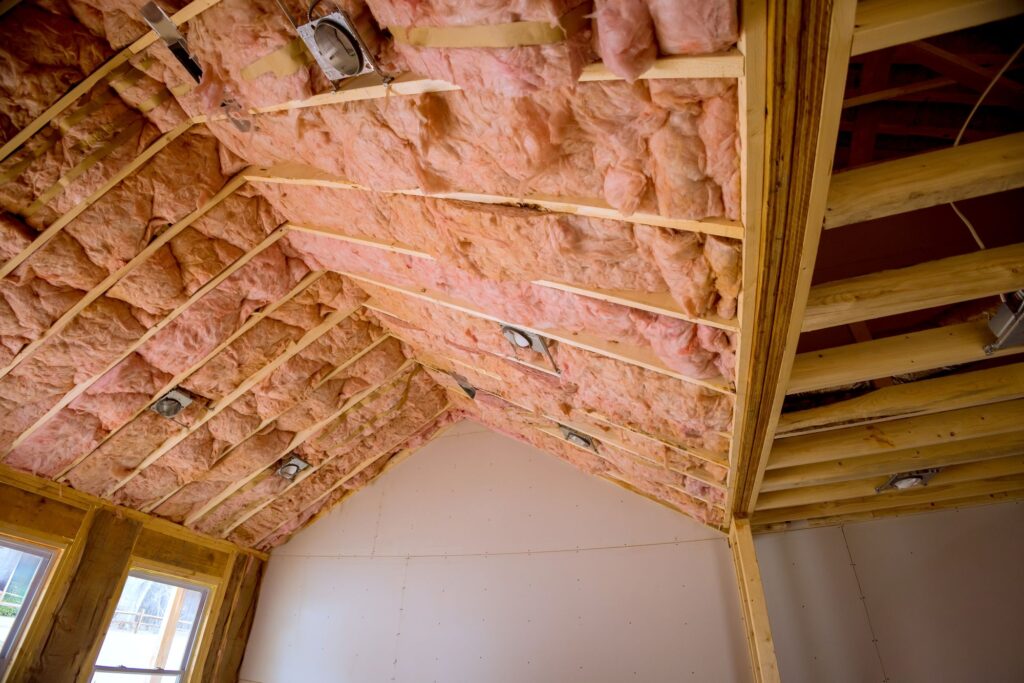
R-value measures resistance to heat flow. Higher R-value improves thermal resistance when installation avoids gaps, compression, and airflow disruption.
Air sealing plays an equally important role. Openings around framing transitions, electrical penetrations, attic access points, rim joists, and service runs allow warm air to escape. When air bypasses insulation, effective R-value drops because heat moves around the cavity instead of through it.
Wall thickness influences both thermal and acoustic potential because deeper cavities allow more insulation or more complex assemblies. Even so, thickness alone does not guarantee performance when air leaks or weak connections exist. In cold climates, poor air sealing can also cause condensation when warm air reaches cold surfaces inside the wall.
When Soundproofing Is the Priority in Edmonton Homes
Soundproofing becomes the priority when privacy, room separation, or noise transfer between occupied spaces creates the main issue. This situation often occurs in homes with basement suites, shared living arrangements, media rooms, home offices, mechanical rooms, and bedrooms near active areas.
A clear decision trigger is audibility. Hearing normal conversation, television, or movement through a wall or ceiling usually means standard insulation is not enough.
The source of noise determines the required approach. Voices, music, footsteps, plumbing, mechanical equipment, and vibration each behave differently. Most solutions reduce noise rather than eliminate it completely.
Basement Suites and Home Theatres
Basement suites require sound control because two living areas share floors, walls, ducts, and service penetrations. Airborne noise travels through cavities, while impact noise moves through framing.
Planning stages matter. Addressing sound performance before drywall installation allows better control of wall and ceiling assemblies. Minimum construction standards rarely meet expectations for sound separation, so upgrades often become necessary.
Mechanical systems also transfer sound. Shared ductwork, plumbing lines, and structural connections allow noise movement even when walls contain insulation.
Home theatres introduce a different challenge. The goal includes limiting sound escape into nearby rooms while maintaining internal sound quality. Achieving this requires attention to wall mass, sealed gaps, and vibration paths.
Offices and Shared Walls
Home offices require sound control when calls and focus matter. A shared wall with a kitchen, living room, bathroom, or bedroom often transmits more noise than expected when cavities remain hollow or gaps remain unsealed.
Weak points create most problems. Electrical boxes, door gaps, ventilation openings, and framing transitions allow sound leakage even when insulation exists.
Shared walls between bedrooms, rental units, or family spaces may also need upgrades. The level of privacy required determines whether existing insulation performs adequately.
When Thermal Insulation Matters More
Thermal insulation becomes the priority when a wall or ceiling separates conditioned space from outdoors, an attic, an unheated garage, or another cold area. Comfort, energy use, and temperature stability depend on insulation and air control in these situations.
Exterior Walls and Attics
Exterior walls and attics control heat retention. Poor insulation or air leakage in these areas leads to cold rooms, drafts, uneven temperatures, and increased heating demand.
Attics require strong air sealing before insulation performs effectively. Warm air rises through ceiling gaps and escapes if those openings remain unsealed.
Exterior wall performance depends on proper installation. Gaps, compression, and missed sections reduce effectiveness even when insulation has the correct R-value. Framing members also create thermal bridging, allowing heat to bypass insulated cavities.
Garages and Bonus Rooms
Garages and bonus rooms often create comfort issues because they connect to colder spaces. A bonus room above a garage can lose heat through the floor assembly, while shared walls must control temperature differences and airflow. Temperature extremes in garages affect adjacent rooms. Poor separation reduces comfort and increases heat loss.
Thermal insulation typically takes priority when the issue involves cold floors, drafts, or heat loss. Sound control becomes secondary unless mechanical noise or door operation affects nearby spaces.
Can One Solution Solve Both Problems?
One wall or ceiling assembly can improve both sound control and thermal performance, but no single product solves both problems completely. Effective results come from prioritizing the main issue, then adding secondary improvements where practical.
| Factor | Soundproofing | Thermal Insulation |
|---|---|---|
| Purpose | Reduces noise transfer between spaces | Slows heat movement through walls, ceilings, and attics |
| Materials | Cavity insulation, added mass, sealed gaps, decoupled assemblies | Insulation with appropriate R-value, air sealing, proper coverage |
| Installation Impact | Requires changes to framing connections, drywall layers, and penetrations | Focuses on exterior walls, attics, and garage separation |
| Cost Range | Involves added layers or assembly complexity beyond standard insulation | Scales with area size, insulation depth, and air sealing scope |
| Ideal Use-Case | Basement suites, home theatres, offices, shared walls | Exterior walls, attics, garages, bonus rooms, cold areas |
Standard insulation reduces some noise in hollow interior walls but does not create full soundproofing. Assemblies with deeper cavities or separated framing improve both acoustic and thermal performance when designed correctly.
Choosing the Right Wall System for Your Renovation
The right wall system starts with identifying the problem. Determining whether the wall is interior or part of the building envelope helps define the priority.
Cold rooms, drafts, attic heat loss, and garage separation require thermal insulation and air sealing. Privacy issues, voices, footsteps, and shared living spaces require sound control.
When both issues exist, addressing the primary failure first prevents wasted effort. Secondary improvements can follow within budget limits.
Retrofit conditions affect available options. Open framing allows more flexibility, while finished walls limit changes and increase cost if modifications require removal of drywall or ceilings.