Vinyl plank and laminate flooring are two of the most common choices for residential renovations in Edmonton. Both products can provide an attractive finished floor, but they perform differently when exposed to moisture, temperature fluctuations, impact, and daily wear. Understanding these differences helps homeowners choose the right flooring for specific rooms, subfloor conditions, and long-term durability expectations. All Star Walls helps Edmonton homeowners evaluate flooring options based on how they will perform in real-world conditions.
Core Construction Differences That Affect Performance
The largest performance differences between vinyl plank and laminate begin with how the products are built. While both use layered construction systems, the core materials respond differently to moisture, temperature changes, and physical stress.
Vinyl plank flooring uses a synthetic core that does not absorb water. Laminate flooring typically uses a high-density fiberboard core that contains wood-based materials. This distinction affects how each product responds when exposed to moisture over time.
Core construction also affects how flooring responds to subfloor conditions. Laminate generally performs best over flatter subfloors because its rigid boards can make imperfections more noticeable. Vinyl plank often tolerates minor subfloor variations better, particularly over concrete basement slabs that may not be perfectly level.
Edmonton homes commonly contain both concrete and wood subfloors. Concrete basement slabs present different moisture considerations than upper-floor wood subfloors, which can influence flooring selection.
Waterproof vs Water-Resistant Cores
Most modern vinyl plank products offer waterproof core construction. Water can remain on the surface for extended periods without causing the core itself to swell or break down. This makes vinyl plank suitable for areas where spills, tracked-in moisture, or occasional water exposure are realistic concerns.
Laminate flooring has improved significantly in recent years, and many products now offer enhanced water resistance. However, water-resistant and waterproof are not the same. If water penetrates joints or remains trapped for long periods, laminate cores can swell, expand, or suffer permanent damage. Once swelling occurs, affected boards often require replacement.
Waterproof vinyl plank does not mean the entire floor system is immune to moisture-related problems. Prolonged water exposure can still affect subfloors, transitions, perimeter materials, and create conditions that contribute to mold growth if moisture remains trapped. Waterproof performance also depends on product specifications and proper installation.
Expansion and Contraction in Cold Climates
Edmonton’s seasonal temperature changes can affect flooring performance. Indoor humidity levels often fluctuate throughout the year as heating systems run during winter and moisture levels change between seasons.
Once flooring is installed inside a climate-controlled home, humidity changes generally affect movement more than outdoor temperatures. Vinyl plank typically experiences less dimensional movement because it does not absorb moisture like laminate’s fiberboard core.
Laminate can expand and contract more noticeably as environmental conditions change. Proper expansion gaps and installation practices help manage movement, but the underlying material properties remain different.
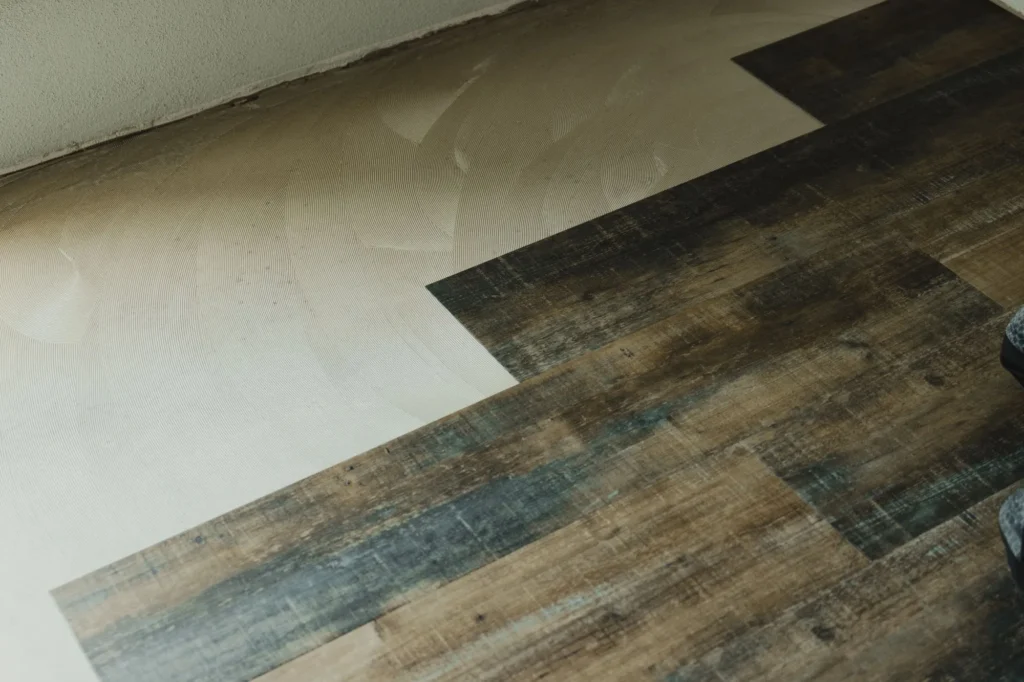
Durability Under Daily Wear
Durability depends on the type of wear the floor experiences. Households with pets, children, heavy furniture, or frequent foot traffic may prioritize different performance characteristics.
Durability also extends beyond surface wear. Flooring must withstand furniture loads, daily traffic, moisture exposure, and subfloor movement over time. This is where differences between vinyl plank and laminate become more noticeable.
Scratch Resistance
High-quality laminate flooring often provides excellent scratch resistance because of its durable wear layer. This can make laminate appealing in homes where pet claws, furniture movement, and everyday abrasion are common concerns.
Vinyl plank also offers good scratch resistance, particularly in higher-quality products. However, sharp objects and heavy dragging can sometimes leave visible surface damage more easily than comparable laminate products.
Scratch resistance varies significantly between product grades. Wear layer quality, manufacturing standards, and overall product construction often influence performance more than flooring category alone.
Impact Resistance
Vinyl plank typically handles impact more effectively because the material has greater flexibility. Dropped objects are less likely to cause chipping or edge damage compared to some laminate products.
Laminate flooring can resist normal household use very well, but harder impacts may create chips, cracks, or edge damage that are difficult to repair. This difference becomes more noticeable in active households and high-traffic areas.
Heavy furniture, appliances, and concentrated point loads can affect both flooring types differently. Vinyl plank’s flexibility can help absorb some impacts, while laminate’s rigidity can make edge damage or chipping more likely under concentrated force.
Moisture Risk: Basements, Kitchens, and Entryways
Moisture exposure is often the deciding factor when comparing vinyl plank and laminate flooring. Edmonton basements, entryways, mudrooms, kitchens, and areas near exterior doors face higher moisture risks than most other rooms.
Vinyl plank generally performs better in these environments because the core material does not absorb water. Minor spills, wet footwear, snow melt, pet accidents, and occasional moisture exposure are less likely to cause permanent damage.
Laminate can perform successfully in some moisture-prone areas when exposure remains limited and spills are cleaned promptly. Laminate can also perform successfully in Edmonton basements that remain consistently dry and well-controlled. However, basements carry greater moisture uncertainty than most upper-floor rooms, making vinyl plank the lower-risk choice in many situations.
It is also important to distinguish between occasional spills, elevated humidity, and actual water intrusion. Small spills generally present limited risk when cleaned promptly. Recurring moisture, concrete slab moisture migration, sump failures, seasonal dampness, and minor flooding events create much greater long-term concerns. In these situations, vinyl plank generally provides stronger protection against moisture-related damage.
Comfort, Sound, and Underlayment Differences
Flooring comfort depends on both the flooring material and the underlayment system beneath it. Vinyl plank often feels slightly softer underfoot because the material has more flexibility. This can improve comfort during prolonged standing.
Laminate typically feels firmer and can produce a more solid walking surface. Some homeowners prefer this characteristic because it more closely resembles traditional hardwood flooring.
Sound performance varies by product and installation method. Underlayment selection often has a greater impact on noise reduction than the flooring material itself. Some products include attached underlayment, while others require separate underlayment systems. Both flooring types benefit from properly matched underlayment systems, especially in multi-level homes where footfall noise is a concern.
Perceived warmth often depends on the combination of flooring, underlayment, and subfloor type rather than the flooring material alone. Floors installed over concrete basement slabs may feel cooler than floors installed over wood-framed upper levels.
Cost Considerations in Edmonton Renovations
Material pricing varies by product quality, thickness, wear layer, and manufacturer. Installation requirements, subfloor preparation, and project complexity also influence total project cost. Waterproof construction, premium wear layers, and additional floor preparation can increase overall project costs regardless of flooring type.
| Comparison Factor | Vinyl Plank | Laminate |
|---|---|---|
| Moisture Tolerance | Excellent | Moderate |
| Lifespan | Long | Long |
| Installation Needs | Moderate | Moderate |
| Maintenance | Low | Low |
| Typical Cost | Generally Higher | Generally Lower |
The price difference is often influenced by the level of moisture protection, product quality, and installation requirements. Some projects justify the additional investment, while others may achieve comparable results with a lower-cost flooring option.
When Each Option Makes More Sense
Vinyl plank often makes more sense in basements, kitchens, entryways, mudrooms, laundry areas, and other spaces where moisture exposure is possible. It is also a strong choice when homeowners want greater protection against spills, seasonal moisture, and water-related damage.
Laminate often makes more sense in bedrooms, living rooms, hallways, and other dry interior spaces where moisture risk remains low. Homeowners who prioritize scratch resistance, a firmer feel underfoot, and lower upfront material costs may find laminate to be the better fit.
Subfloor conditions can also influence the decision. Vinyl plank often handles minor subfloor imperfections better, while laminate generally performs best when installed over flatter substrates.
The higher cost of vinyl plank is often justified when basement installation, moisture exposure, or long-term water protection is a priority. In dry living spaces with lower moisture risk, laminate can provide a cost-effective solution without a significant sacrifice in day-to-day performance.
Neither product is universally better. The right choice depends on moisture exposure, subfloor conditions, room location, expected wear, and renovation budget. All Star Walls helps Edmonton homeowners select flooring solutions that align with both performance requirements and long-term value.